Even the most simplistic innovation is fraught with complexity - What are the risks? How much will it cost? How will the change alter the organization? Add the complexities of organizations and power structures you begin to wonder how anything new happens.
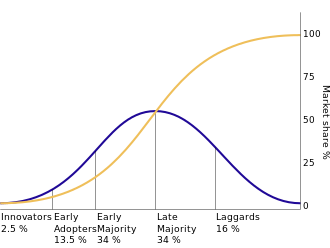
The Diffusion of Innovations model is a heuristic , a shortcut to making complex decisions without getting overwhelmed by information. It helps maintain focus on priorities and engage higher order strategic thinking. The model provides leaders with preemptive insight into change response within the organization - it is a reminder that innovation is never democratic. Henry Ford knew this when he said "If I had asked people what they wanted, they would have said faster horses."
Innovation is stifled when laggards and late majority adopters exercise excessive influence. In these situations every new idea is eliminated before consideration. The negative power of inertia on organizations and individuals is always underestimated. Imagine if we quantified the opportunity cost of anti-innovation?
Everyone in an organization views innovation from a different lens that is shaped by values, beliefs, experiences, and capabilities. Understanding these perspectives will help innovators and leaders develop the right strategy to move from concept to creation.